

This Is How Good Ideas Spread
And why everyone should have access to the resources to inspire change.
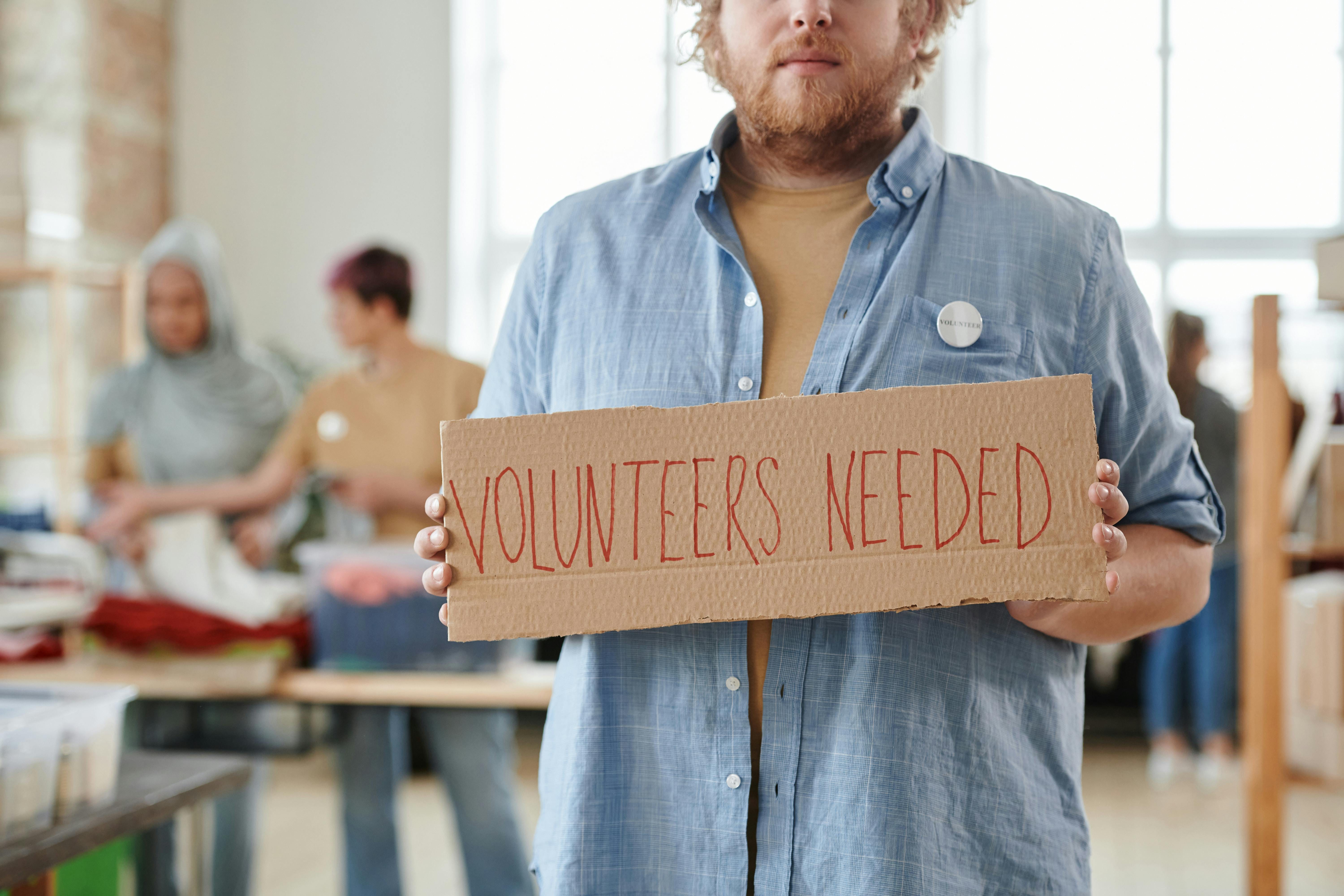
Every community has a version of the same sentence.
Someone should plant more trees here. Someone should start a community fridge. Someone should repair the broken bikes instead of sending them to the landfill. Someone should create a safer, greener, more connected place for us.
ChangeX exists for the moment right after that sentence; the moment when possibility could either quietly die or actually begin.
Fixing a problem
An uncomfortable truth about community action is that the biggest barrier is not apathy; it’s about not knowing where to start.
A teacher wants to build an outdoor classroom but has no budget. A neighborhood group wants to launch a repair café but needs tools, insurance, and a basic playbook. A parent wants to create a pollinator garden, a community fridge, or a coding club, but does not know which model works, how to organize volunteers, or how to find seed funding.
The idea is there. The will is there. But the gap between idea and action seems too insurmountable.
Or at least it used to be.
Founded in Dublin in 2015, ChangeX is a nonprofit community engagement platform with a simple but quietly radical premise: communities should not have to start from scratch when good solutions already exist.
Instead, ChangeX connects everyday people with proven project models, starter resources, expert support, and real funding so they can launch local efforts where they actually live.
Its model serves three groups at once: communities that want to start projects, social innovators who want their ideas replicated, and funders who want measurable impact in specific places. Together, they form a system designed to do something the social sector has struggled with for decades, and make good ideas spread at the speed they deserve.
The Man Who Got Frustrated Enough to Build Something
Paul O’Hara did not set out to build a platform. He set out to change the world through a “two-year MBA in how to change the world” and then got completely hooked.
After studying marketing and working in brand management at Unilever and Cadbury, O’Hara joined Ashoka, the global social entrepreneur network, as they were building an investment fund across Europe. He stayed for more than eight years. And during those eight years, something started to bother him.
There were all of these great ideas, but they never gained any traction. However, the solutions were relevant to other geographies and communities.
O’Hara began experimenting with the import and export of social ideas between communities. It worked, but it didn’t scale easily. So in 2015, he and co-founder Niamh McKenna launched ChangeX to do it properly, with technology as the engine.
McKenna brings her own formidable background: a law degree from NUI Galway, an international management degree from Trinity College Dublin, stints at Social Entrepreneurs Ireland and PwC, and now the role of Head of Impact at ChangeX, where she works with social innovators to spread their models, with corporate partners to fund them, and with communities to measure what actually happens.
Together, they built what O’Hara calls “a functioning change machine, end to end.”
The goal: take what works anywhere and make it work everywhere.
How It Actually Works
ChangeX is part inspiration board, part grant portal, part community organizing toolkit, and the process is deliberately designed to be accessible to ordinary people with no prior experience launching anything.
Here is the basic flow:
Step 1: Browse. Visit the ChangeX platform and explore a library of proven project ideas, everything from pollinator gardens to coding programs to community fridges to repair cafés.
Step 2: Apply. When a fund is open in your area (often backed by a corporate partner like Microsoft, ServiceNow, Paramount, or the LEGO Foundation), apply to start a project in your community.
Step 3: Complete the 30-Day Challenge. This is ChangeX’s signature move, and it matters. Rather than simply handing over money, ChangeX asks applicants to spend 30 days taking real first steps: forming a team, writing an action plan, holding an initial meeting, and connecting with ChangeX’s support team. It turns foggy intention into concrete momentum.
Step 4: Receive funding. Groups that complete the challenge receive the first portion of their grant — typically 70% of the total — to get the project moving. The remaining 30% is unlocked after they share photos, a project summary, and impact data showing what happened.
That structure is not bureaucratic friction. It is architecture for success. Community projects often fail not because the idea is bad, but because the first steps are foggy. ChangeX turns those first steps into a checklist that almost anyone can follow.
As one Chicago participant, Pearl Ramsey, put it after using ChangeX funding to start a community garden on the South Side: “This is hands-down the most accessible approach for everyday people who want to do good. This funding was instrumental in facilitating positive community relations... It was a miracle!”
A global impact
ChangeX is not a small experiment quietly humming along in Dublin.
The platform now operates across 26 countries. Its funders include Microsoft, ServiceNow, Accenture, Paramount, and the LEGO Foundation, among others. In 2024, ServiceNow alone invested an additional $1.1 million into sustainability-focused community projects across nine countries through ChangeX. Microsoft has partnered with ChangeX across dozens of datacenter communities in the US and Europe, running annual “Community Challenges” that have funded hundreds of local groups.
When ChangeX piloted a new approach in 2024, rapidly deploying proven innovations across new geographies, they took several ideas global across nine countries in roughly six months. For O’Hara, that was the breakthrough moment.
“The goal was to see if we could spread these innovations in months rather than decades,” he explained in a February 2025 interview with The Irish Times. “We launched it in Q2 of 2024, and by the end of the year, so around six months later, we had those innovations up and running right across nine countries. For us, it was a big breakthrough, because if we can do it for a few ideas, then there’s no reason we can’t do it for thousands of ideas.”
The next phase: scale 1,000 proven innovations to communities worldwide. The ambition, aligned with the United Nations Sustainable Development Goals, is to impact one billion people globally by 2030.
What Kinds of Projects Can People Start?
The range is wide, but the common thread is a practical local impact you can see and touch.
On the US platform, project ideas include Repair Café, Community Fridge, Open Orchard, Girls Who Code, FIRST LEGO League, Pollinator Partnership, Urban Thinkscape, Grow It Yourself groups, FreshWater Watch, and more.
In Atlanta, ChangeX-backed projects have included creating pollinator habitats, organizing repair events to keep items out of the waste stream, launching community fridges to redistribute surplus food, and planting fruit trees in public spaces.
In Phoenix, a teacher named Nancy Parra-Quinlan used ChangeX funding to upgrade her school’s aging FIRST LEGO League robots, leveling the playing field against better-funded teams from wealthier districts.
This is where ChangeX becomes especially interesting for anyone who cares about sustainability. And the best part about it is that they are not theory, they are tangible, local, and copyable.
A community fridge can reduce food waste while feeding neighbors with dignity. A repair café can extend the life of household items and keep them out of landfills. A pollinator garden can support bees, butterflies, biodiversity, and local food systems. An open orchard can turn a neglected public space into a shared abundance.
None of these ideas requires a PhD or a seat on a nonprofit board. They require someone willing to begin.
Look Around Your Own Community
Where is food being wasted? Where could a garden grow? Where could kids learn outside? Where could people repair instead of replace? Where could neighbors share more, waste less, and build something together?
You do not have to have all the answers. ChangeX’s whole model is built on the idea that the answers already exist; they just need pathways, funding, and someone willing to take the first step.
Visit changex.org to explore project ideas and check whether a fund is open in your area.
The Blueprint - Community Action
Have you ever wanted to do more than just read stories about change? We have, and that’s why we created our Community Action series, which details pathways for you to make helpful changes and positive impacts in your community!
This week’s community action is: A conversation.
I know what you’re thinking. What does that even mean?
It means whatever you want it to be.
Over the past few months, I’ve been putting together these community action plans for a variety of different projects, from food pantries to community gardens.
I’ve done my best to break down those processes and make them simple. But one of the common themes that I’ve found throughout every project is communication.
We need to talk to one another. Even the people we think we’ll never agree on any subject. Because, regardless of our opinions, we all live on this planet together. We’re all a part of the human experience.
We all feel joy, and grief, and pain, and jealousy, and anger, and hope. And the more we understand each other’s experiences, the more we communicate our fears and our aspirations, the more we can begin to understand one another. And the more we understand, the more we can empathize, and the more we empathize, the less likely we are to act in anger and replace that with a helping hand.
So, yeah, that’s it. Just have a conversation with someone this week. It doesn’t have to be about climate change, or sustainability, or zero-waste. Just talk to someone you don’t know, in real life, not online.
Thank You
If you’ve made it this far, then thank you. I created The Blue Marble to solve a problem in the media landscape: Too many people talking about problems, and not enough people talking about solutions.
We have all the tools we need to leave behind a better world than the one we inherited. We just need to implement them. And we do that by understanding the solutions to those problems.
We’re a reader-funded publication. If you can, consider upgrading to a paid subscription. It’s only $30/year, and that’s less than a dollar a week for these stories delivered straight to your inbox.
Ditch the doom. Hype the hope. Let’s build a better tomorrow together and leave the world better than we found it.
I didn’t know about ChangeX! That’s incredible. And I might add if there’s no fund in their area, they could learn crowdfunding like in the Film Powerstatin and there is a guide on the website and Dan has a community around crowdfunding these types of projects!